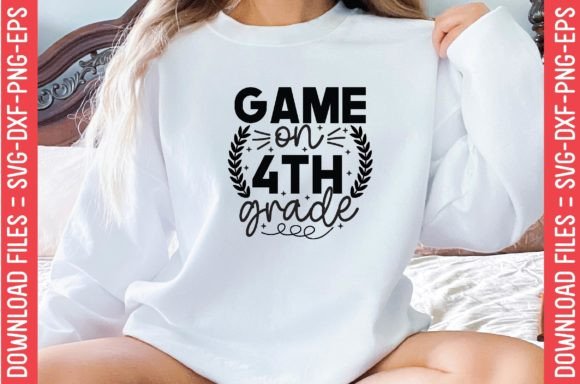
Game on 4th Grade: A Designer’s Real-World Embroidery Review
As someone who spends more time staring at stitch simulations than I do sleeping, I have developed a keen eye for what works in the hoop and what looks great on a screen but fails in thread. When I first pulled up Game on 4th Grade, my initial reaction was one of cautious optimism. The theme is specific, targeting a niche that is often underserved in high-quality custom apparel: the fourth-grade classroom experience. But does it translate well from a digital asset to a tangible, stitched product? Let’s break down how this design performs when you move beyond the mockup and into actual production.
First Impressions and Visual Personality
The mood of Game on 4th Grade is energetic and playful, which is exactly what you want for school-themed merchandise. It avoids the overly childish tropes often found in lower-elementary designs, striking a balance that appeals to nine and ten-year-olds who are starting to feel too cool for babyish graphics. The layout appears clean, with distinct shapes that suggest good separation between elements. For an embroidery designer, this is crucial. Complex, muddy clusters of details turn into a tangled mess under the needle, but this design seems to respect the limitations of thread.
Visually, the personality is bold. It feels like a design meant to be seen from across the playground. This makes it an excellent candidate for T-Shirt Designs where visibility is key. However, as a reviewer, I look past the aesthetic to the structural integrity. The lines appear thick enough to hold a satin stitch or a dense fill stitch without losing definition, which is a promising sign for durability.
Real-World Application: From Screen to Stitch
I recently considered using a similar concept for a custom order involving a batch of personalized tote bags for a local teacher’s appreciation event. Game on 4th Grade would fit perfectly here. The design’s scale suggests it would sit comfortably on a standard tote bag without overwhelming the fabric. When working with canvas or heavy cotton, the stability of the material allows for higher stitch density without puckering, meaning the final product would look professional and substantial.
Beyond tote bags, this graphic shines in custom apparel. Imagine this embroidered on the chest of a heavyweight sweatshirt. The texture of the fleece provides a nice contrast to the smooth sheen of rayon or polyester embroidery threads. For Etsy sellers and small shop owners, this versatility is a major selling point. You can market it as part of a back-to-school collection, offering it on hoodies, t-shirts, and even embroidered patches that students can iron or sew onto their backpacks.
It is also worth noting the potential for baby embroidery or younger sibling gifts. While the text specifies "4th Grade," the gaming motif is universal. With a slight adjustment in size, it could work for older siblings waiting for their turn to join the school ranks, making it a thoughtful personalized gift option during the holiday season.
Technical Considerations and File Formats
One thing that immediately stood out in the product description is the file package. You receive a ZIP folder containing an SVG vector, a DXF file, and a PNG file at 300 dpi with a transparent background. Here is where we need to pause and think critically about our workflow. If you are a pure machine embroiderer, you might be wondering where the native embroidery files (like PES, DST, or EXP) are. The presence of SVG and DXF suggests this is primarily a vector graphic intended for cutting machines or digital printing, which can then be adapted for embroidery.
For those of us doing commercial embroidery, this means an extra step. You will likely need to use digitizing software to convert the SVG into a machine-readable format. This is not necessarily a bad thing; in fact, it gives you control over the stitch density and underlay. However, if you are looking for a plug-and-play machine embroidery design, you must check if the seller provides pre-digitized files or if you are expected to handle the conversion. Always confirm licensing before selling finished items or digital products derived from these assets.
The included PNG is useful for creating printable mockups or social media previews. High-resolution transparent backgrounds allow you to place the design on various fabric textures digitally, helping customers visualize the finished product before they buy. This is a smart inclusion for digital product sellers who want to streamline their marketing process.
Where to Use Caution
While the design is strong, it is not without its challenges. Small hoop sizes require careful placement. If you are stitching this on a cap, the curved surface can distort the text. I recommend testing the design on a curved hoop size simulator or doing a physical test run on a scrap piece of similar fabric. Textured fabrics, like terry cloth towels or waffle-knit shirts, can swallow smaller details. If the design has fine lines, they may get lost in the pile of the fabric.
Dark fabrics present another hurdle. If the design relies on light thread colors, you will need a solid underlay to prevent the fabric color from bleeding through. Always check thread color contrast. A black shirt with dark blue stitching will vanish, so plan your palette carefully. Additionally, avoid placing this design on highly stretchy fabrics without a cut-away stabilizer. The tension of the stitches can cause the garment to warp after washing, ruining the crisp look of the Graphics.
Practical Notes for the Craft Business Owner
Before you list this as a new item in your craft business, take the time to digitize or optimize the file properly. Test the design on scrap fabric first. Look for jumps, trims, and potential thread breaks. If you are using a running stitch for outlines, ensure it is dense enough to look intentional and not sparse. Compare light and dark fabric backgrounds to see how the design holds up. Does it pop? Is it readable?
For handmade product creators, consistency is key. Use this design to build a cohesive brand image. If you specialize in school-themed items, Game on 4th Grade can become a staple in your catalog. It adds value because it is specific and timely. Parents and teachers are always looking for unique items that celebrate specific milestones, and fourth grade is a significant one.
Finally, remember that buyer engagement often hinges on presentation. Use the provided PNG to create high-quality images. Show the design on a real tote bag design or a sweatshirt embroidery sample. Let customers see the texture and the quality of the stitch. This builds trust and demonstrates professionalism. Whether you are creating holiday embroidery gifts or everyday small shop product listings, the effort you put into preparing this design will reflect in the final sale.
In conclusion, Game on 4th Grade is a versatile asset with strong commercial potential, provided you handle the technical conversion and placement with care. It bridges the gap between fun, youthful energy and professional craftsmanship, making it a valuable addition to any designer’s library of design assets.